Read the image as the beginning of a question
A visual reference can help a team discuss atmosphere, scale and participation. It cannot tell the whole story of how an experience worked. These examples pair images from Munchingsquare's public portfolio with short descriptions and design questions. Follow the project links for the studio's own account of its role and the production context.
The examples are references for different relationships between people, content and space. They are not interchangeable templates, and the images should not be read as proof of a particular audience outcome. A photograph may show several visitors together without revealing whether they collaborated, observed or completed independent interactions.
Use the collection to make a brief more precise. Instead of asking for something that looks similar, identify what interests you: the shared surface, the personal viewpoint, the way physical scenery and media coexist, or the connection between cultural content and interaction. That distinction opens a more useful creative conversation.
7 Herbs: content encountered through distinctive displays
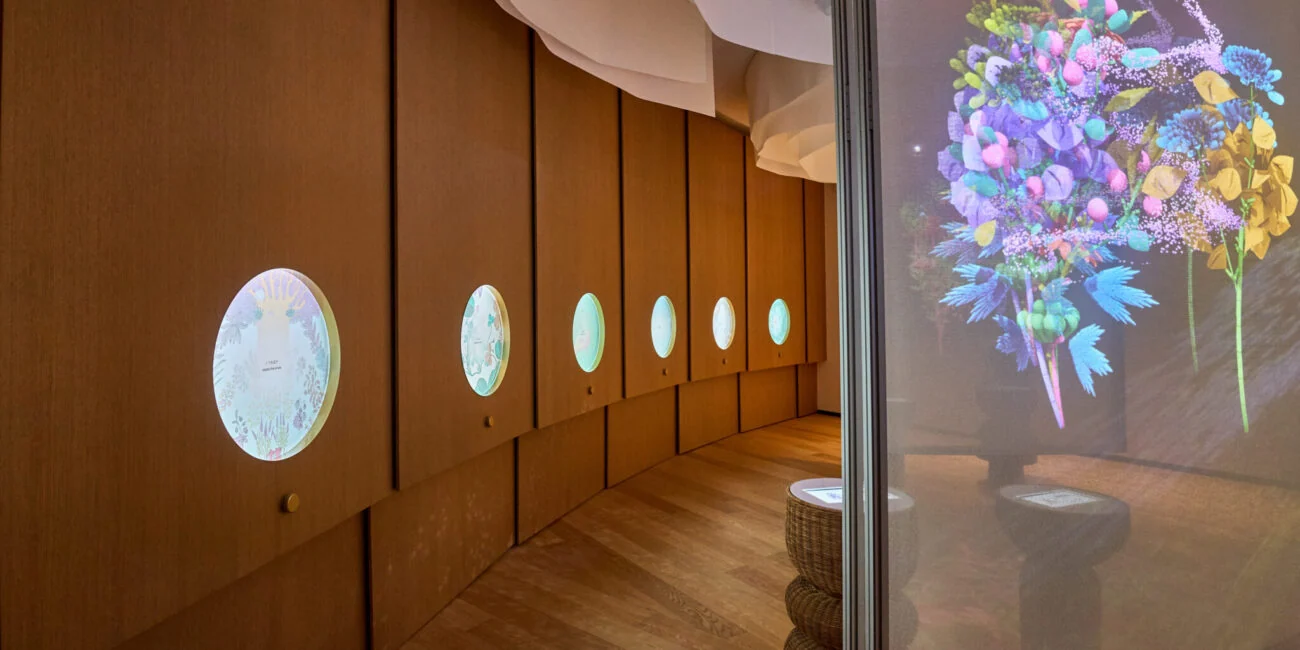
The 7 Herbs installation for the Poland Pavilion at Expo 2025 presents an animated herbarium through circular displays. Munchingsquare's project account connects Polish herbal traditions with a Japanese seven-herbs custom and describes its technology delivery role. The image establishes a real exhibition setting where visitors can attend to individual displays within a shared space.
The useful design question is how a distinctive display format supports the subject. Circular surfaces, illustrated content and placement along the gallery create a recognisable encounter. A new project should ask which of those relationships matters to its own story, rather than copying the shape simply because it is visually memorable.
For a group journey, consider what companions can discover at neighbouring displays and what gives them a reason to compare discoveries. Parallel attention can create a shared experience when the content connects. Without that relationship, several displays may remain separate attractions occupying the same room.
An interactive table: a common point of attention
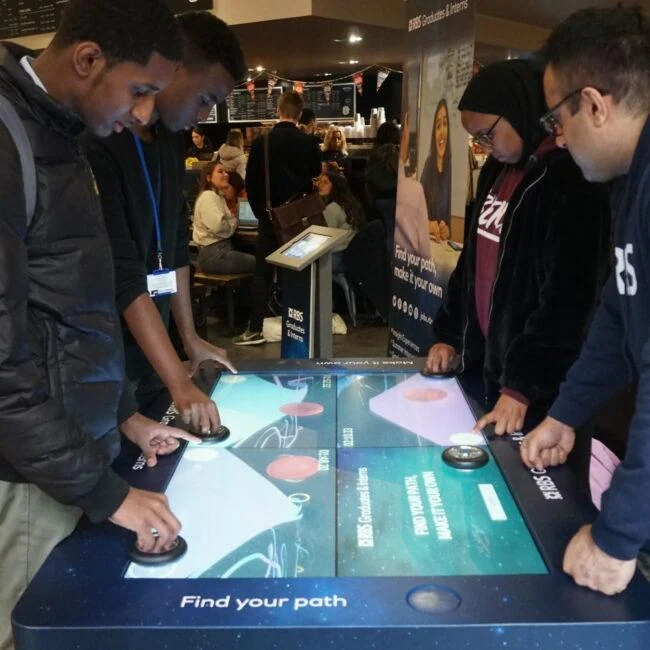
The Gamified Interactive Table for RBS appears in Munchingsquare's portfolio as a multi-user recruitment game. The image shows visitors gathered around one surface. It provides a reference for an interface that can be seen by companions and can potentially organise activity around a common focus.
A common surface introduces practical questions. Who can reach it, who sees the results, and how are turns or simultaneous actions understood? A group may gather naturally, but that does not automatically distribute control fairly. The social rules of the interface need to be designed alongside its visual and technical behaviour.
When considering this format for another subject, start with a shared task worth doing. Comparing, assembling or negotiating may each suggest a different interaction. Choose the task first, then decide how the surface makes each contribution visible and how the group understands its collective result.
KAGAMI: a performance-based mixed reality reference
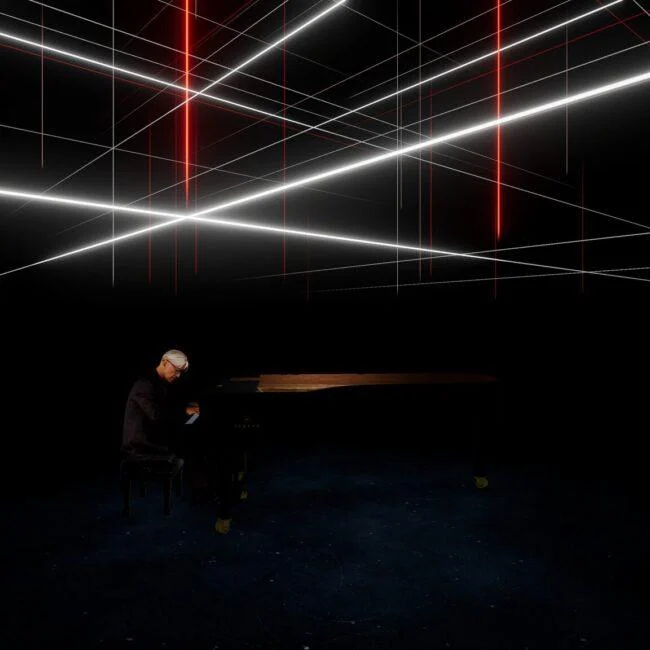
Munchingsquare lists KAGAMI as a mixed reality concert experience involving Ryuichi Sakamoto. The project image is a visual reference for a performance context, rather than a generic technology demonstration. Visit the original project page for the specific production and delivery details.
For a new concert or narrative brief, examine how personal viewpoint relates to collective attendance. A digital medium may let each visitor encounter a performer from a particular position while the venue provides a shared setting. The design challenge includes the transitions into and out of the device, as well as the central performance.
Ask what people can discuss together afterwards and what establishes a common frame of reference. An experience can be individually viewed yet socially meaningful. That relationship needs deliberate attention, rather than an assumption that a group of people using equipment at the same time automatically shares an identical encounter.
The Fall: physical performance and projected material
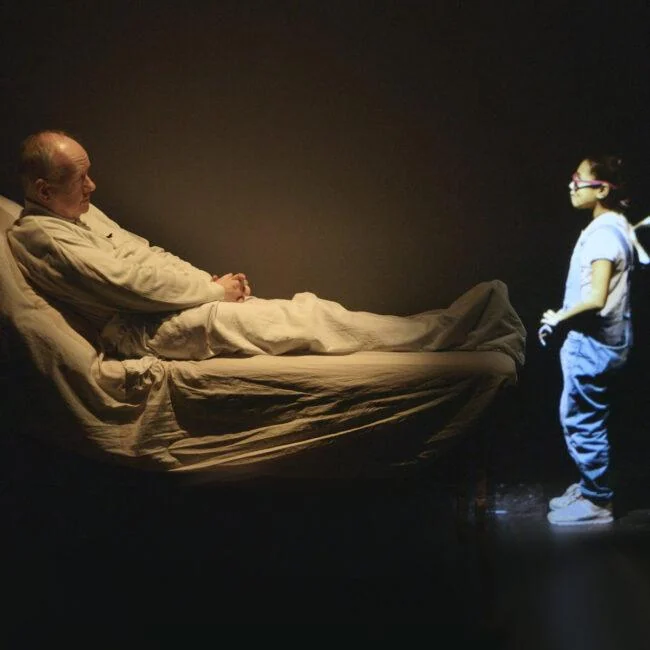
The Fall is described in Munchingsquare's portfolio through projection mapping and synchronised theatre technology. Its image shows projected material integrated with a physical stage setting. This offers a concrete reference for media working within performance, where timing and the relationship to objects or performers matter.
A useful creative question is what the projection contributes that the physical scene cannot communicate alone. It might establish another perspective, suggest a transformation or introduce a presence. The answer should connect to the narrative rather than simply justify an additional visual layer.
For commissioners, this kind of reference also opens a practical discussion about cues, rehearsals and repeatability. Live action and media may need to accommodate one another. Ask how the production supports that relationship under actual performance conditions, and what the team needs to preserve the intended rhythm.
WaterAid: a topic-led event encounter
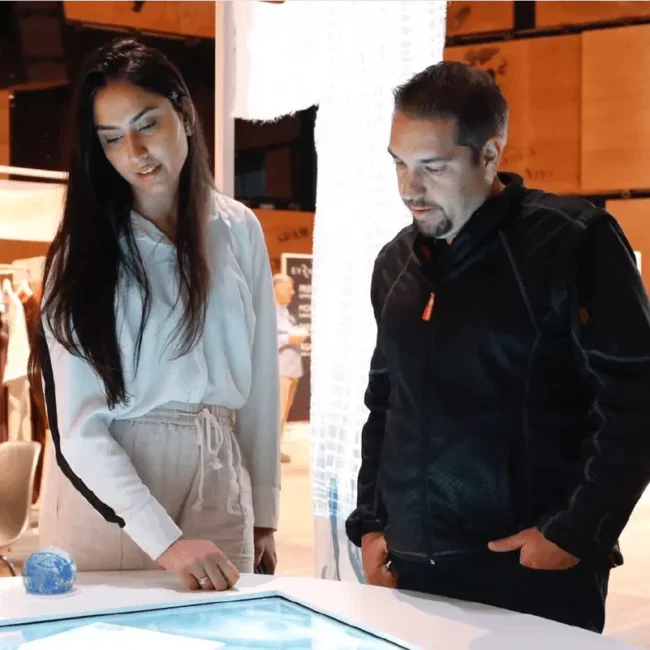
The WaterAid Experiential Space is listed as an interactive sustainability installation at Copenhagen Fashion Summit. The featured image shows visitors attending to a tabletop display. It is a reference for presenting a subject within an event setting, where the installation's invitation and duration must work with surrounding activity.
The design question is how a complex subject becomes approachable through action. A shared display can let companions examine the same result, while individual inputs can reveal different relationships. Clarify what visitors should understand and how the interaction supports that understanding, rather than assuming the subject becomes clear because an interface is present.
For a new activation, consider the route out of the encounter. Further reading, a conversation or a relevant project page can extend the visitor's attention. The next step works best when it continues the subject the installation has introduced, rather than adding an unrelated promotional request.
unReal City: a multi-participant XR theatre reference
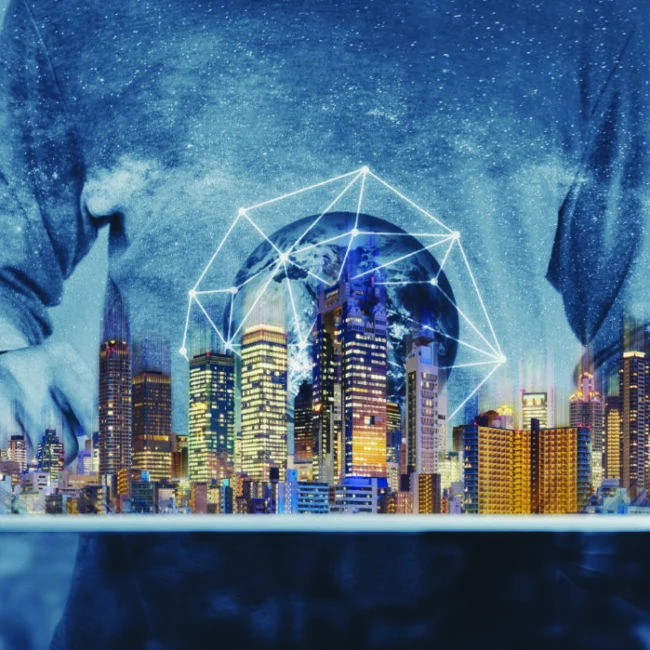
Munchingsquare's portfolio identifies unReal City as multi-participant XR theatre at Brighton Dome. The image used here is project artwork featuring a city and network imagery; it is not presented as a photograph documenting an audience session. That distinction matters when using visual material to discuss how an experience actually operated.
This reference connects two useful questions: what each participant encounters through a personal medium, and what holds the group together as a theatrical event. An XR project can have strong individual viewpoints, but the collective structure still needs an intelligible rhythm, orientation and opportunities for shared meaning.
When developing a related brief, map the personal and group journeys separately before comparing them. Identify common context, moments of difference and the points where those differences matter. This helps the concept stay focused on the human relationship rather than being defined only by the equipment involved.
Wider references to explore
Punchdrunk's official archive for The Burnt City offers a past example of a large theatrical environment built around the siege of Troy. Meow Wolf's official House of Eternal Return page provides a reference for an immersive art attraction. These are links for further exploration, not claims of involvement by Munchingsquare.
Compare references through the experience they offer: how visitors enter, what they can choose, how they discover meaning and what happens between companions. Surface appearance is only one layer. A careful comparison helps a team identify the relationship it wants to create and avoid borrowing an aesthetic without understanding its narrative purpose.
Put this guide into practice
Plan a focused visitor review
Choose one part of the journey that matters to visual examples & real projects. Describe what the visitor should notice, understand or do.
Observe the encounter
Try the encounter with someone unfamiliar with the concept. Record their actions and interpretation before explaining the intended design.
A question for the review
Which relationship in the reference is relevant to the new brief?
Sources & further reading
Practical design suggestions are Youmersive’s editorial guidance. Named projects are attributed to their creators; references do not imply a partnership.