Turn a message into an encounter
Experiential marketing gives people an opportunity to encounter a brand through an activity or environment. A product launch, pop-up installation, interactive exhibition or live event can all serve this purpose. Immersive brand experiences add a sense of being within a coherent world, where the setting and participation help communicate the brand's ideas.
The starting point is a visitor benefit. What will someone discover, do or understand that makes attending worthwhile? A branded room may generate photographs, but photographs alone do not explain the relationship between the visitor and the brand. Build a reason to participate that has substance beyond the opportunity to stand beside a logo.
For a group, the activity can create a common memory while allowing different contributions. One visitor might make a choice, another might explain a perspective, and the group might see a combined result. The brand's role becomes clearer when its purpose is expressed through what people do, not added as an unrelated final message.
Define the purpose before the spectacle
Choose one primary outcome. It might be understanding a product capability, reconsidering a familiar category or beginning a conversation with the organisation. Supporting outcomes can follow, but a brief that asks for awareness, education, sales, community and entertainment equally may produce an experience with no clear centre.
Describe the audience precisely enough to guide decisions. Existing customers need different context from first-time visitors. A trade event audience may want technical depth, while people passing through a public space may have only a few minutes. Design the invitation and duration around actual circumstances rather than an idealised visitor with unlimited attention.
Connect the activity to the brand story
A strong activation expresses a relevant idea through its mechanics. A collaboration theme could involve combining different contributions; a design-led product could invite comparison or customisation; a sustainability subject could reveal relationships between choices and consequences. These are hypothetical approaches, not promises of a particular commercial result.
Check whether the same activity would work unchanged for a competing brand. If it would, the narrative connection may need more work. This does not mean every interaction needs heavy branding. A coherent relationship between purpose, action and feedback can communicate more clearly than repeating the company name across every surface.
A real portfolio reference
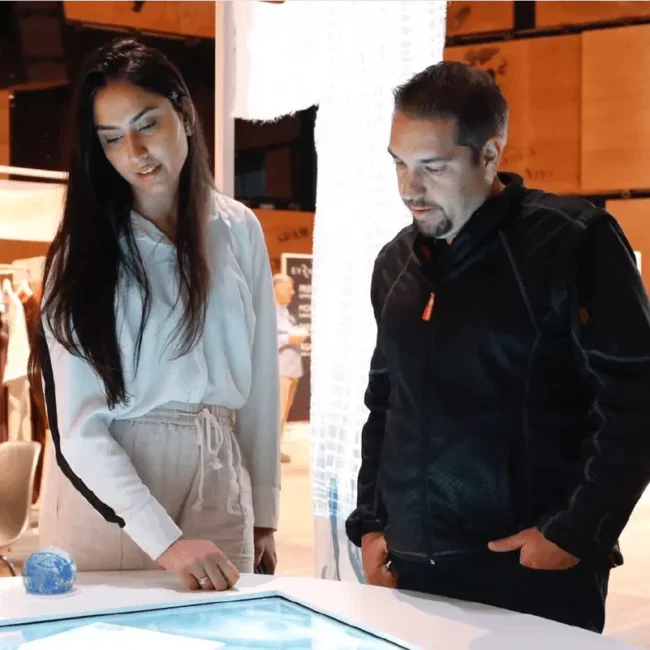
Munchingsquare's portfolio includes WaterAid Experiential Space, an interactive sustainability installation for Copenhagen Fashion Summit. It offers a relevant reference for a topic-led experience in an event setting. The image shows visitors attending to a shared tabletop; the full project account belongs on the studio's website.
The broader design question is how an installation turns an abstract subject into something a group can examine together. A common display can support conversation, while individual actions can reveal different aspects of the subject. Evaluate the relationship between content and participation rather than assuming that any interactive surface will create understanding.
Plan the complete visitor journey
The experience begins before the main interaction. Signage, queues, hosts and the first visible response all affect whether visitors know what is offered. Give people a quick way to understand the activity and a deeper layer for those who want to stay. Keep introductory instructions proportionate to the time available.
The exit deserves equal attention. Visitors should know what they can do next and why that step is relevant. A product page, project story or conversation with a team member can extend the experience. Make that route specific; a generic call to action may lose the connection the activity has just established.
Evaluate what actually happened
Separate attendance from participation, and participation from the intended outcome. Countable actions can show how the installation was used, but they do not automatically show whether someone understood the brand message. Pair operational observations with short, appropriately framed questions about what visitors took away.
Use referral links to connect the experience with subsequent website visits where the analytics setup supports it. Youmersive's links to Munchingsquare include campaign parameters for this purpose; they identify referral traffic, while reporting still depends on the receiving site's analytics. The creative goal remains a meaningful experience, with measurement chosen to illuminate that goal rather than replace it.
Put this guide into practice
Plan a focused visitor review
Choose one part of the journey that matters to experiential marketing. Describe what the visitor should notice, understand or do.
Observe the encounter
Try the encounter with someone unfamiliar with the concept. Record their actions and interpretation before explaining the intended design.
A question for the review
What does the activity reveal about the brand’s purpose?
Sources & further reading
Practical design suggestions are Youmersive’s editorial guidance. Named projects are attributed to their creators; references do not imply a partnership.