Start with the exchange
An interactive installation responds to something a visitor does. The input may be a touch, movement, spoken contribution or choice through an object. The output might be sound, light, imagery or a change to the environment. What matters is whether the exchange is understandable and meaningful within the experience.
Technology can detect many things, but detection is not the same as communication. A visitor needs some way to recognise what the installation notices and how their action relates to the result. If that relationship is hidden, the installation may appear broken or random even when its underlying system is working exactly as intended.
For a shared experience, consider who sees the response. An individual action might alter a common display, creating a moment others can witness. Several contributions might build a collective outcome. Alternatively, one person's interaction might remain personal while supporting a wider story. Each arrangement creates a different social relationship.
Make the first action legible
The first encounter establishes confidence. Visitors should be able to recognise that interaction is possible and try a low-pressure action. A visible control, a short invitation or a response that follows movement can help. Avoid requiring several hidden steps before the installation gives any indication that it is listening.
A good first response confirms the connection and invites exploration. It need not explain every capability immediately. For example, touching one element might reveal a simple change, while repeated exploration exposes relationships between several elements. Build complexity through discovery, provided the visitor always has enough feedback to understand the current action.
Design the response around meaning
Ask what the interaction reveals. Does it show a relationship, change a viewpoint or make a contribution visible? An attractive animation can reward action, but it may not advance the experience's purpose. Connect input and output to the subject so the visitor understands why this particular exchange belongs in the installation.
Avoid treating novelty as the entire concept. Once someone has triggered an effect, what gives them a reason to remain, return or discuss it? The answer might be variation, interpretation or collective influence. It should be clear in the experience rather than supplied afterwards through an explanation of what the creators intended.
A portfolio reference: shared tables
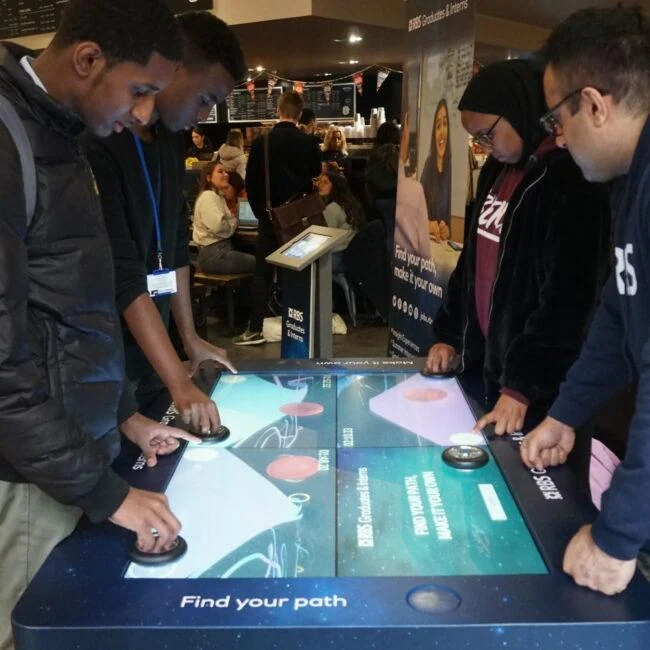
Munchingsquare's portfolio includes a Gamified Interactive Table for RBS, described as a multi-user recruitment game. Its image shows several visitors gathered around a common interface. This is a useful visual reference for interaction where the result is available to companions as well as the person controlling a particular element.
The design questions extend beyond screen content. Can participants reach the controls? Can they see one another's contribution? Does the table support several actions at once, or require turn-taking? Do quieter people have a way to participate? A multi-user installation needs a social design as well as a technical input system.
Think about partial participation
Visitors may enter halfway through, try one action and leave, or watch someone else. Make these encounters intelligible where possible. A spectator should be able to understand the broad relationship between action and response, even if they have not read the introduction. A new participant should know whether they are joining an existing activity or starting a separate one.
If the installation stores contributions, explain the role those contributions play. Are they temporary, part of a display or available in a later session? The narrative can remain surprising, but practical expectations should be clear. Avoid implying that a personal contribution has permanently changed the work if the system simply resets after a short interval.
Prototype the human behaviour
Test the interaction with simple tools before committing to elaborate production. A person manually triggering a response can help reveal whether the basic exchange makes sense. Then test the technical prototype in conditions resembling the venue, since lighting, sound, distance and surrounding activity can change how visitors interpret it.
Observe hesitation, repeated gestures and conversations between companions. These behaviours can show whether the system's feedback is clear. Ask visitors what they believed their action did. Their account may differ from the technical description, and that difference is often more useful than a simple statement that the installation felt impressive.
Reliability is part of the experience
An installation's meaning depends on its availability and consistency. Plan for restarts, support, replacement parts and the point at which staff should intervene. A visitor-facing fallback can preserve some of the subject when an interactive element is unavailable. Design that fallback intentionally rather than leaving a blank display or an unexplained error.
The strongest interactive installations combine a coherent idea, an understandable exchange and an operational plan. When those elements work together, technology becomes a medium for attention and participation. Visitors can concentrate on what the experience reveals, and the group can share a response that feels connected to their actions.
Put this guide into practice
Plan a focused visitor review
Choose one part of the journey that matters to interactive installations. Describe what the visitor should notice, understand or do.
Observe the encounter
Try the encounter with someone unfamiliar with the concept. Record their actions and interpretation before explaining the intended design.
A question for the review
Can visitors explain how their action affected the response?
Sources & further reading
Practical design suggestions are Youmersive’s editorial guidance. Named projects are attributed to their creators; references do not imply a partnership.